
August 24, 2025 – Cambodia
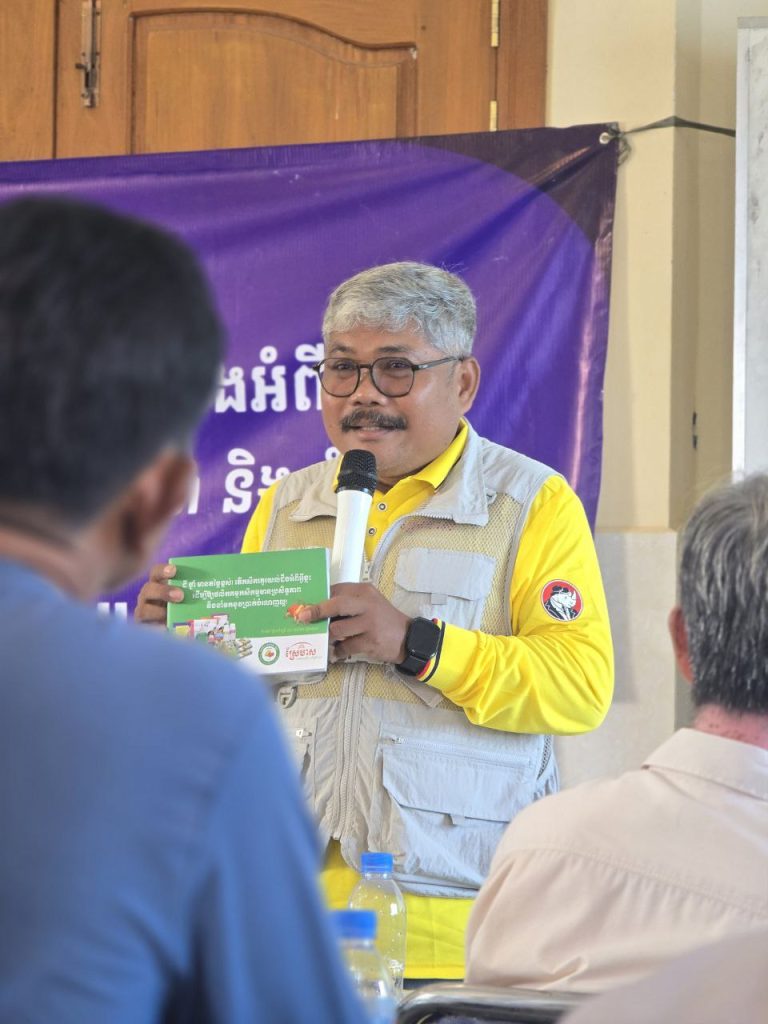
In a concerted effort to build climate resilience and reduce production costs for smallholder farmers, the Cashew Nut Association of Cambodia has launched a series of workshops focused on climate-smart agriculture and improved farming techniques.
So far, ten workshops have been conducted across four key agricultural provinces—six in Kampong Thom, two in Ratanakiri, and one each in Kratie and Stung Treng—reaching over 900 participants.
The primary objective of these workshops is to equip farmers with strategies to increase crop yields while adapting to the challenges posed by climate change. According to experts leading the sessions, expecting consistently high agricultural prices is unrealistic. While high prices are the goal of producers, consumers prefer affordability. As such, the most sustainable path forward is to increase productivity.
“Selling at high prices reduces market competitiveness,” Silot Uon, chairman of CAC, explained. “Instead of relying on unpredictable factors like fertile soil or favorable weather, farmers must adopt planned, science-based production methods.”
Farmers were urged to stop relying solely on nature and instead focus on proper soil and crop management. Over time, soil fertility depletes if not maintained, making it harder to sustain yields. “We need to take care of the soil as much as the plant,” said Mr. Chiv Vandy, an agronomist. “Smart farming means understanding what’s happening beneath the soil and giving the crop exactly what it needs.”
Key takeaways from the workshops included:
-
Using DAP fertilizer at planting to establish strong root systems.
-
Applying NPK fertilizers during vegetative and reproductive stages to ensure balanced nutrition throughout crop development.
-
Creating clear production plans, such as determining the expected yield per hectare and calculating the exact amounts of fertilizer and compost needed.
Experts emphasized that with proper planning and adequate inputs, farmers can increase yield without increasing costs. “The production area, labor costs, pest control, and harvesting expenses all remain the same. By only adjusting fertilizer use based on yield goals, farmers can produce more and still sell at competitive prices,” Chiv Vandy said.
The workshops also introduced the concept of Climate-Smart Agriculture (CSA)—an approach that enhances productivity while reducing environmental impact. CSA incorporates practices such as water-efficient irrigation, use of climate-resilient crop varieties, agroforestry, and the integration of digital tools to monitor farm performance.
The CAC plans to continue its outreach efforts, aiming to support more farmers in adopting sustainable and climate-resilient farming practices. By embracing innovation and long-term planning, Cambodia’s cashew sector hopes to thrive even as climate challenges grow more severe.