
CAC News
Kampong Thom, October 4 – The Cashew Nut Association of Cambodia (CAC), in collaboration with Agro Pharmacy Co., Ltd., a supplier of agricultural inputs, hosted a technical workshop aimed at helping farmers reduce chemical use, cut production costs, and increase productivity in cashew farming.
The workshop, held on October 4, built on the success and lessons learned from last year’s farming practices. It served as a platform to share experiences, challenges, and opportunities for innovation in sustainable cashew cultivation.
Adapting to Climate Change and Pest Challenges
Participants explored key environmental and biological factors affecting cashew production, including annual rainfall patterns, off-season tropical rains, storms, and reduced sunlight exposure. These climate factors have a significant impact on pest behavior and disease outbreaks.
The workshop addressed common pests such as tea mosquito bugs, caterpillars, thrips, whiteflies, and mealybugs. CAC emphasized the importance of identifying pest types and their seasonal presence before applying pesticides. Farmers were advised to rotate pesticide ingredients and limit their use to avoid resistance.
On the disease front, blossom blight and anthracnose were flagged as major threats, especially in wet or humid conditions. Best practices such as orchard sanitation and limiting exposure to acidic dew were recommended.
Addressing Flower and Nut Loss
Cashew productivity is also hindered by flower and nut loss due to pests, diseases, nutrient deficiencies, and incomplete fertilization. Experts highlighted the need for balanced fertilization—particularly nitrogen, phosphorus, potassium, calcium, and boron—and improved pollination techniques.
Training Thousands of Farmers Across Cambodia
Since May 2025, CAC has conducted 32 training sessions out of a planned 40, reaching over 3,400 farmers across 10 provinces. Each session, with an average attendance of 90 farmers, cost approximately 2 million Riel (about $500 USD) and provided participants with practical, farm-based education rather than financial handouts.
“Our aim is not to give money back like many NGOs due to our limited resources, but to empower farmers with real techniques that can help them make more income from their land,” Silot Uon, CAC chairman, stated.
Workshops included demonstrations on making low-cost, effective fertilizers such as liquid compost, Highly Effective Microorganisms (HEM), Indigenous Microorganism Bacillus Subtilis (IMOBs), and Bordeaux Mixture.
A Booming Sector
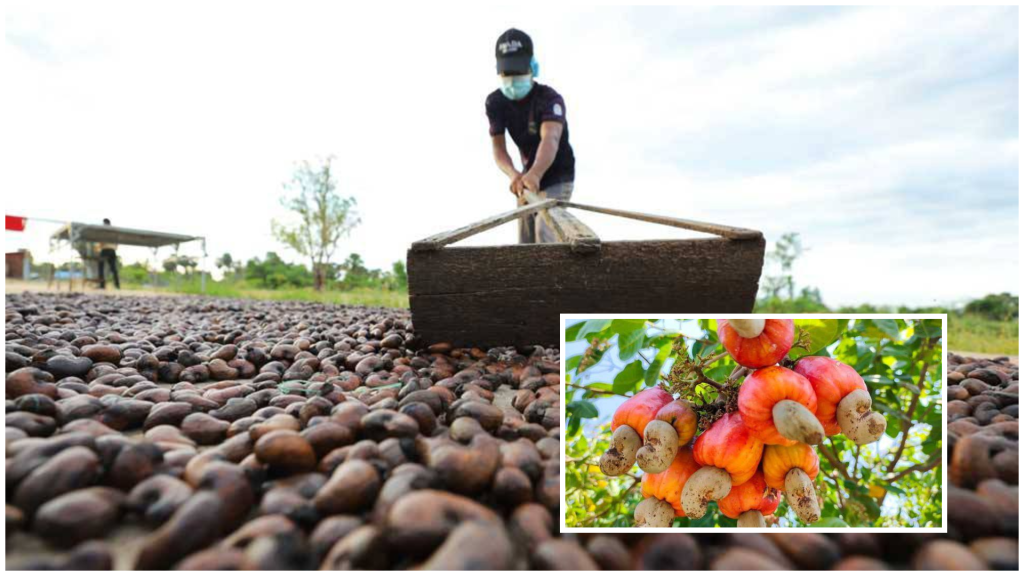
Cambodia’s cashew sector remains highly promising. According to unofficial data, the country exported 960,000 tons of raw cashew nuts over the past eight months, generating approximately $1.4 billion USD in revenue for the national economy.
With an emphasis on climate-smart agriculture and sustainable practices, CAC’s initiatives aim to solidify Cambodia’s standing as a major player in the global cashew market while improving farmer livelihoods.